

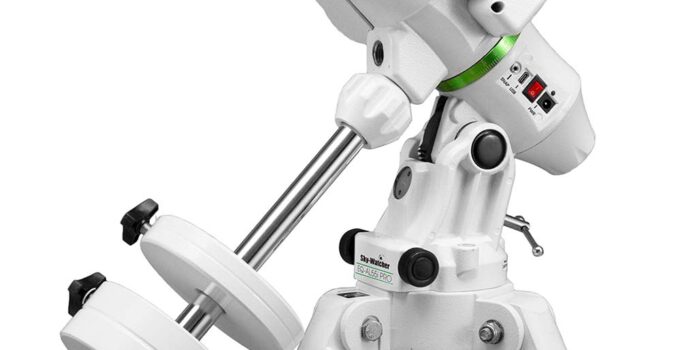
For many amateur astronomers and astrophotographers, a Sky-Watcher mount is the backbone of their imaging rig. Whether you are using the venerable HEQ5, the workhorse EQ6-R Pro, or the beefy EQ8, these mounts are renowned for their reliability and performance-to-price ratio. However, like any precision mechanical instrument, a mass-produced mount can often benefit from a bit of “TLC” to move it from ‘good’ to ‘exceptional’.
If you’ve noticed your stars aren’t quite round or your guiding graph in PHD2 looks like a mountain range, it’s likely time for a tune-up. Tuning is the process of reducing mechanical play (backlash) and ensuring the internal gears mesh perfectly. Here is how to master the art of the Sky-Watcher tune-up.
Understanding the Enemy ─ Backlash and Friction
Before picking up an Allen key, we must understand what we are trying to fix. Most sky watcher mounts use a worm gear system. A small brass worm gear spins against a large aluminium or brass ring gear to move the Right Ascension (RA) and Declination (Dec) axes.
Backlash occurs when there is a tiny gap between the teeth of the worm and the ring gear. When the motor reverses direction, there is a momentary delay while the gears “re-engage.” Friction, on the other hand, occurs when the gears are pressed too tightly together or the factory-applied grease has become “stiff”—a common issue in the colder UK climate.
Step 1 ─ The “Grip and Wiggle” Test
Start by balancing your mount perfectly with your usual telescope payload attached. Once balanced, tighten the clutches. Gently—very gently—try to move the telescope at the eyepiece end in both RA and Dec directions.
If you feel a slight “clunk” or see a microscopic amount of movement, you have mechanical backlash. If the mount feels rock-solid but the tracking is still poor, your issues may be internal friction or “stiction” caused by the factory grease.
Step 2 ─ Adjusting the Worm Gear Mesh
This is the most impactful “tune” you can perform. On most Sky-Watcher EQ mounts, the worm gear housing is held in place by four main bolts, with two small grub screws used to move the worm closer to or further from the ring gear.
- Loosen the holding bolts: Just a fraction, so the housing can move.
- Adjust the grub screws: To reduce backlash, you want to move the worm gear closer to the ring gear. Work in tiny increments, we are talking 1/16th of a turn.
- Check for binding: Rotate the axis a full 360 degrees using the hand controller at maximum speed. If the motor tone changes or “labours” at certain points, the gears are too tight. This is because no ring gear is perfectly circular; you must find a “sweet spot” that eliminates play without causing the motors to stall.
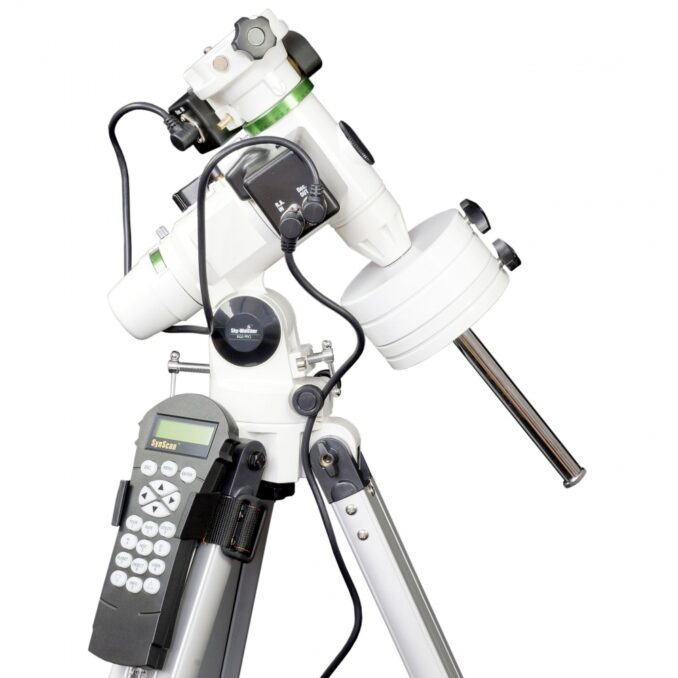
Step 3 ─ The “Regrease” (The Deep Tune)
Sky-Watcher mounts are often shipped with a thick, sticky “shipping grease” sometimes jokingly referred to by the community as “synta-glue.” In the freezing temperatures of a British winter, this grease can thicken significantly, causing the motors to work harder and inducing periodic error.
For a thorough tune-up, many experts recommend stripping the mount, cleaning the gears with a degreaser, and reapplying a high-quality synthetic grease (such as Super Lube or Aeroshell). This reduces the torque required to move the axes, leading to much smoother sub-arcsecond guiding.
Step 4 ─ Belt Tensioning (For Pro Models)
If you own an EQ6-R Pro or have performed a belt-mod on an older HEQ5, the belt tension is a critical variable. A belt that is too loose will introduce its own form of backlash, while a belt that is too tight can put undue pressure on the motor bearings, leading to premature wear. The belt should be taut enough that there is no visible slack, but you should still be able to deflect it slightly with a finger.
Step 5 ─ Balancing for the “East-Heavy” Advantage
A secret tip from the world of expert astrophotographers is the “East-Heavy” balance technique. In the UK, as we track objects across the meridian, gravity works on our gear. By making the Eastern side of the mount slightly heavier (by shifting the counterweights or the scope), you ensure that the worm gear is always “pushing” against the ring gear.
This keeps the gear teeth in constant contact, effectively “loading out” any remaining backlash.
The Result ─ Sub-Arcsecond Precision
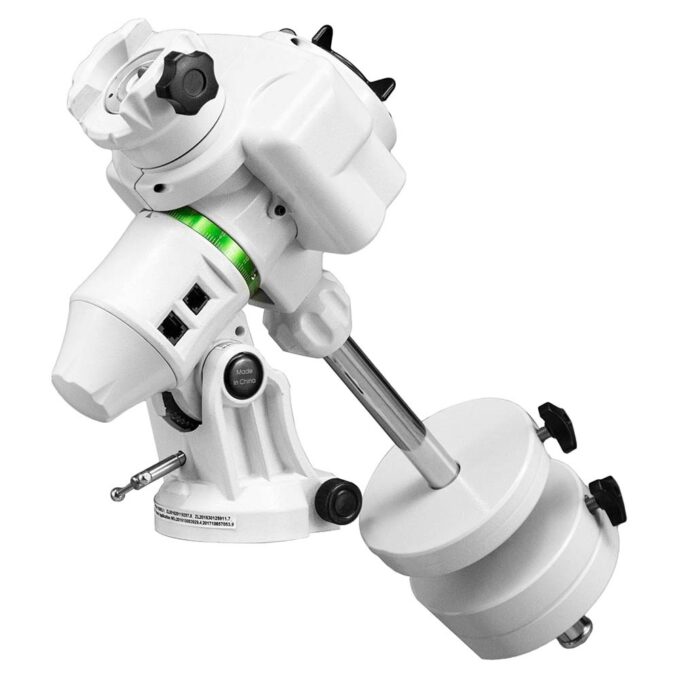
Tuning a mount can be intimidating, but the rewards are profound. A well-tuned Sky-Watcher mount can often achieve guiding performance that rivals mounts costing three times the price. You’ll find your “lost” subs decrease significantly, and your stars will regain that pin-sharp, circular profile that defines high-end astrophotography. And whenever you’re looking for telescopes for sale a good mount can improve your experience greatly.
Remember, patience is the most important tool in your kit. Small adjustments, frequent testing, and a methodical approach will transform your Sky-Watcher from a standard mass-market mount into a precision-engineered observatory workhorse.